Fishing Game on a Shared Phone: What Needs a Fresh Check?
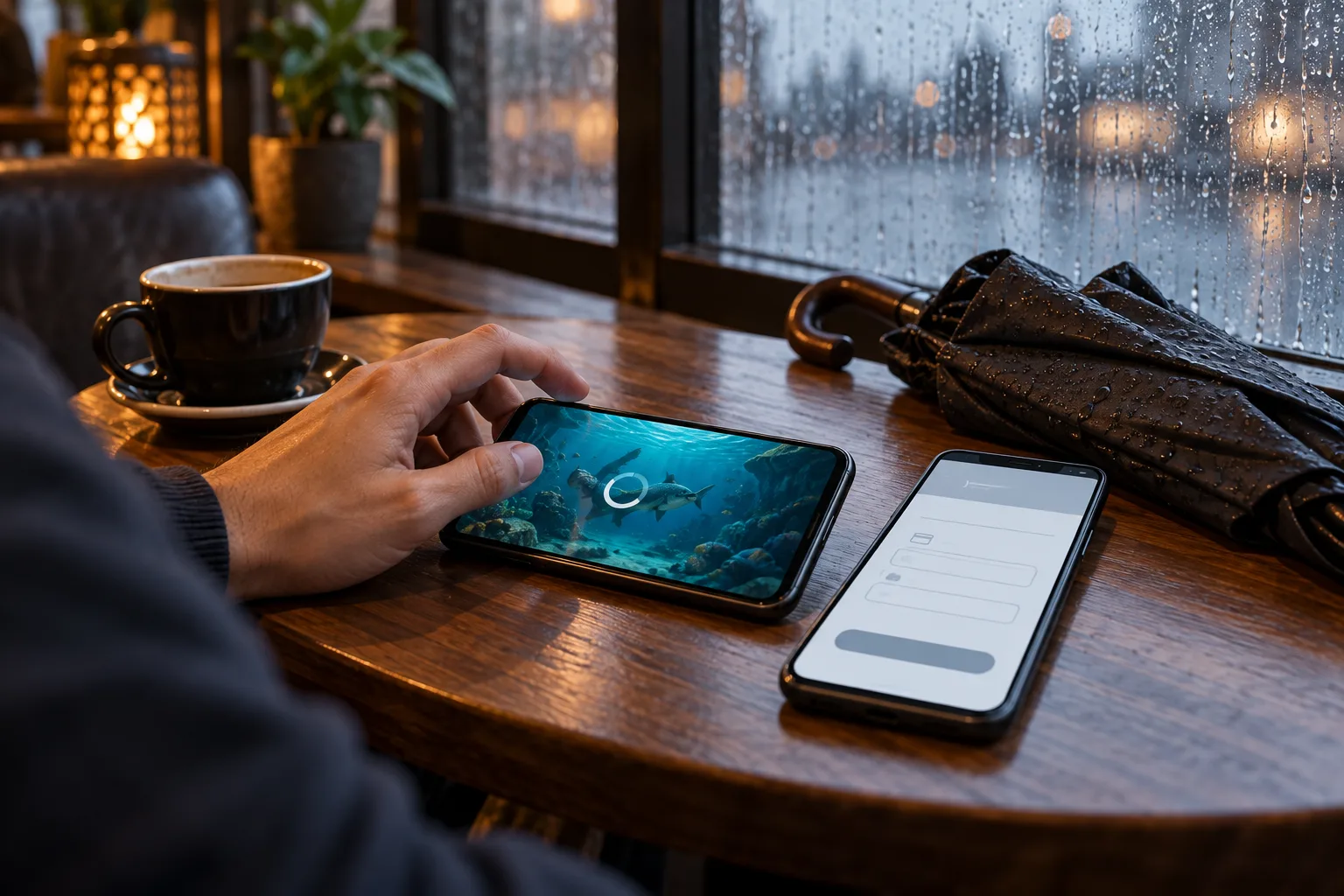
You have finished a Fishing Game session when someone at home asks to borrow your phone for an e-wallet payment. The game is still open, and you have only a moment to switch apps. That ordinary handover deserves more attention than another look at the leaderboard.
For an experienced player, the concern is what remains accessible after play stops. An account session, a firing setting or a saved login can matter more than the underwater scene still visible onscreen. Treat handing over the device as a separate action from ending the round.
This matters most when adults share a handset, borrow a tablet or move between personal and household devices. Someone using a private phone faces less handover risk, but still needs to check what a reopened game restores. Device sharing should never become account sharing.
The control you remember may belong to another session
Familiar graphics can make a returning session feel ready immediately. However, visual familiarity does not establish the selected shot cost, whether an automatic firing mode is active, or whose account is signed in. Look at the controls themselves before touching the play area.
Check how the particular game handles settings when you leave and return. Its help panel may explain whether selections persist, reset or depend on the device. A remembered setting is useful only when you deliberately confirm it.
- Read the signed-in account identifier before entering the game, especially when another adult has used the same browser for their own account.
- Check the displayed cost of the next shot rather than relying on the cannon artwork or the amount you selected previously.
- Inspect any automatic firing control and confirm its current state before placing a finger near targets or other interactive game elements.
- Review the selected mode for any separate charge or changed control behaviour, using the game instructions where the labels are unclear.
- Keep the phone in your hands while checking these details, so another person cannot accidentally touch a control during the review.
These checks establish what your next action will do. They do not improve the odds of catching a target or make a paid shot safer financially. A large creature remaining onscreen is no reason to hurry through them.
A household handover needs a definite endpoint
Picture an evening at home: you are playing over Wi-Fi, and another adult needs the handset to open their payment app. Switching applications gets them to the right screen, but does not establish that your gaming account has signed out.
Use a deliberate handover sequence while the phone is still with you. The important distinction is between leaving the picture and ending access to the account. Check both, particularly if the browser can reopen your previous tabs.
- Stop any firing action through the available game control, and check that the control visibly reflects the stopped state before proceeding.
- Allow any pending game action to resolve where possible; if it remains unsettled, keep the device and check the account record.
- Use the account's sign-out option, then revisit the account page to check whether it requests authentication instead of opening your balance.
- Close the gaming tab or app after signing out, and review whether the device offers a saved login that another borrower could use.
- Hand over the phone only after securing both gaming access and any payment account that the borrower does not own.
If you cannot confirm that paid activity has stopped, postpone the handover. Do not ask the borrower to finish the round or watch the balance for you. That blurs responsibility for actions made through your account.
Where children can access a household device, keep gambling accounts inaccessible through device locks and account controls. A colourful fishing screen can resemble ordinary entertainment. Its appearance does not communicate whether touching it spends money.
The balance colour is not the spending rule
A returning player may recognise the balance panel without checking which funds it represents. If your account has a Bonus, read its conditions before assuming Fishing Game wagers qualify or that the displayed amount is withdrawable.
The same distinction matters when Free Credits appear alongside deposited funds. Check eligibility, expiry and withdrawal conditions on the relevant offer page. A separate colour or icon can help identify a balance, but cannot replace those conditions.
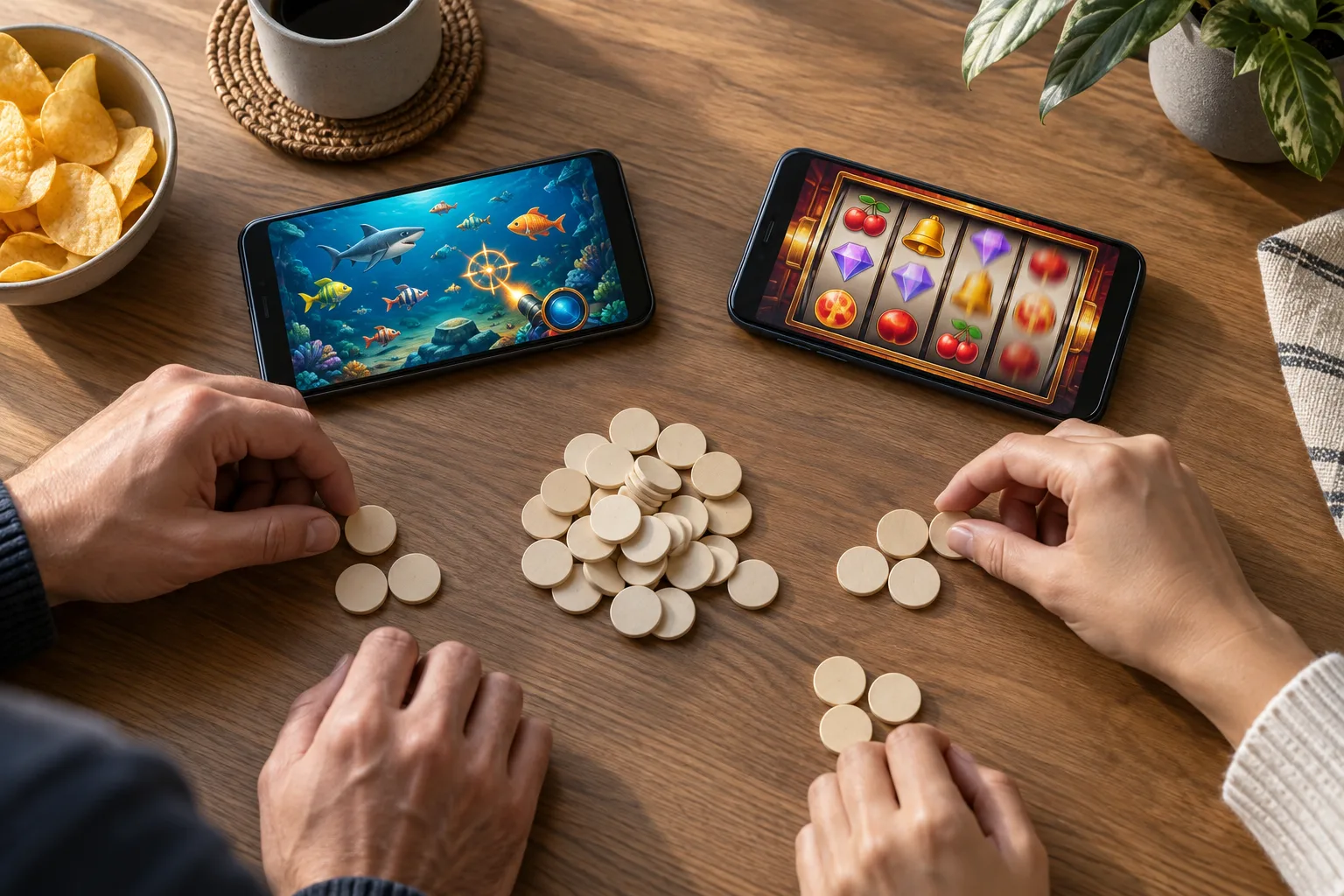
For a hypothetical example, imagine an account showing PHP 400 in deposited funds and PHP 100 in promotional funds. The combined display might suggest PHP 500 available, but that addition alone establishes neither spending priority nor withdrawal eligibility. Check the wallet breakdown before acting.
This affects players with multiple balance types more directly than players whose account contains only deposited cash. Even then, the account balance and a pending game result should not be treated as interchangeable. Review the account record if the displayed figures differ.
A call interrupts attention before it interrupts play
An incoming call, delivery message or payment notification can cover the screen while you are making decisions. Whether the game pauses depends on its behaviour. An overlay disappearing does not prove that the previous game state stayed unchanged.
This is especially relevant during short sessions between household errands or while waiting for a ride. The available time can end abruptly. If you expect an interruption, consider whether you can give paid play enough uninterrupted attention.
- Stop interacting with the game when a call or notification obstructs the controls, rather than tapping around an unfamiliar overlay.
- After returning, inspect the current firing state and selected shot cost before attempting to continue from the position you remember.
- If a loading screen appears, wait for a clear account or game state instead of repeatedly tapping the place where controls previously appeared.
- Check the game history for any action whose outcome you missed, using the relevant record rather than reconstructing it from animation.
- End the session when interruptions keep recurring, because divided attention makes it harder to track actions and recognise an unintended setting.
A private device does not remove this problem. The affected group includes anyone switching between gameplay and calls, work messages or transport apps. What matters is whether you can observe and control each paid action.
One handset does not make payment identities interchangeable
Shared hardware creates another easy misunderstanding: the wallet currently open on the phone may belong to someone else. Before opening the cashier, confirm whose payment account is active. Access to an app is not permission to fund a gambling account.
Check the cashier's accepted methods and account-name requirements before choosing an e-wallet or payment-centre route. Use your own eligible payment account and follow the stated verification process. Do not assume that a relative's successful payment establishes eligibility for yours.
- Compare the gaming account identity with the payment account you intend to use, and resolve any mismatch before initiating a transfer.
- Read the cashier instructions for the selected route, including any reference details needed to associate the payment with your account.
- Keep transaction references private when another person borrows the device, especially if receipts remain visible in notifications or the photo gallery.
- Enter passwords and one-time codes yourself in the intended service, and never pass them to a borrower to complete the process.
A payment-centre receipt also deserves careful handling on a shared phone. If you photograph it, store it somewhere other borrowers cannot casually browse. Share only the necessary transaction details through the operator's official support channel when resolving a payment issue.
Returning to the phone is a new decision
When the handset comes back, avoid treating the unfinished screen as an invitation to resume. Confirm your account, controls and available funds again. The other person may have changed the device orientation, closed an app or opened a different browser.
If only you use the device, shorten the handover checks accordingly, but keep the checks on paid controls. Account privacy and game-state awareness solve different problems. Neither tells you that the next shot is likely to win.
The useful endpoint is straightforward: you know which account is open, what the next action costs and whether you still want to play. If any of those checks remains unresolved, leave the game closed until you can establish it.